Black Sea Bass regulations
Connecticut · Curated reference from cited public sources · listings, not permission to fish or retain a catch · This selected Connecticut saltwater reference subset is not a complete rulebook.
FIELD GUIDE
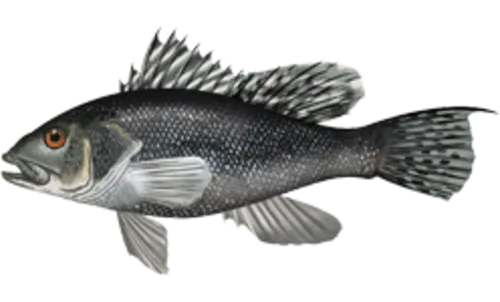
Centropristis striata
speciesREVIEWEDA western Atlantic sea bass of the family Serranidae, important to commercial and recreational fisheries from Nova Scotia to the Florida Keys and Gulf of Mexico.
HABITAT
Rock jetties and rocky substrates in shallow water, also recorded at greater depths.
SIZE
max 66 cm (26 in), typically ~30 cm
IDENTIFY
Black sea bass are commonly associated with structured habitat. Compare the complete body, fin, and color pattern with the source profile before confirming an identification.
LOOK-ALIKES
Treat the scientific name Centropristis striata, whole-body profile, and fin pattern as the identification record; do not resolve an ambiguous image from the common name alone.
WHERE
Black sea bass prefer structured habitats such as reefs, wrecks, and oyster beds. In the Mid-Atlantic, they generally move inshore and into bays in spring, then offshore in fall as water temperatures change.
WHEN
Seasonal movement is most pronounced north of Cape Hatteras, with inshore spring use and offshore fall movement. The South Atlantic pattern is less migratory, so regional timing matters.
TECHNIQUE
NOAA describes handlines as a recreational method and notes the species' association with structure. Keep presentations and tackle appropriate to the depth and current, without treating habitat notes as a location recommendation.
HANDLE
For a released fish, dehook in the water whenever possible, use wet hands, minimize air exposure, and support the body if it must be lifted.
CONSERVATION
Black sea bass are managed differently north and south of Cape Hatteras, with regional seasons, size and bag measures, and habitat protections. Management context is not species-identification confirmation.
RULES
Read the current official rule for the state, federal-water boundary, vessel type, method, and season that apply to the trip. This educational section is separate from the official rule listing.
SOURCE
FACT-CHECKED 2026-09-03 · REVIEWER fact-check-lane
TEXT CONDENSED FROM WIKIPEDIA, AVAILABLE UNDER CC BY-SA 4.0
Black Sea Bass identification is educational; species identification does not establish legal applicability for Connecticut.
- LISTED LIMIT
- 4 fish per angler
- LISTED MIN SIZE
- 15.5 inches
- LISTED SEASON WINDOWS
- May 16, 2026 through Nov 25, 2026 · 4 fish listed
- APPLICABILITY
- General recreational season is May 16-November 25 with no mid-season closure. Paying party/charter passengers have a May 16-December 31 season, with 4 fish May 16-August 31 and 6 fish September 1-December 31. Measurement excludes the tail-fin filament.
- SOURCE AUTHORITY
- Connecticut DEEP Saltwater Fishing Guide, Species Regulations, Current marine recreational fisheries regulations
UPDATED April 1, 2026 · CHECKED Nov 10, 2026, 12:00 PM UTC · EFFECTIVE YEAR 2026
CT DEEP marine sport fishing ↗The CT DEEP page is an informational summary; the applicable state regulations are authoritative.
COAST-TO-COAST COMPARISON
Black Sea Bass rules across 6 other coastal states
LAUNCH SITES
Curated launch sites in Connecticut (1)
This reference does not grant permission to fish or retain a catch. Location, method, vessel, species identification, and emergency closures can change what applies. Verify the applicable official rules.