Greater Amberjack regulations
Louisiana · Curated reference from cited public sources · listings, not permission to fish or retain a catch · This selected Louisiana saltwater reference subset is not a complete rulebook.
FIELD GUIDE
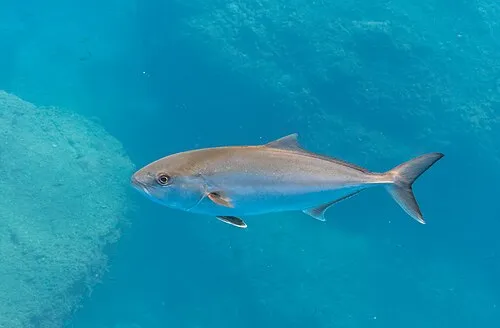
Seriola dumerili
speciesREVIEWEDA predatory jack with a long list of common names — allied kingfish, rock salmon, yellowtail, sea donkey — found in temperate, subtropical, and tropical seas worldwide.
HABITAT
Smaller fish in shallow water; larger fish prefer 18–72 m (59–236 ft) over deeper reefs.
SIZE
typical 100 cm (39 in); max 190 cm
IDENTIFY
Greater amberjack (Seriola dumerili) are powerful torpedo-shaped jacks with a brownish-olive back, silvery-white belly, amber lateral band, and a dark diagonal 'eye bar' running from the upper lip through the eye toward the first dorsal fin.
LOOK-ALIKES
Separate greater amberjack from almaco jack and banded rudderfish by body depth, gill-raker/dorsal ray counts, and fin shape: almaco jack have a much deeper body and high sickle-like second dorsal lobe, while juvenile banded rudderfish retain bold bars and a white tail tip.
WHERE
Adults patrol high-relief offshore wrecks, towers, artificial reefs, and shelf-edge ledges typically from 60 to 240 feet and deeper.
WHEN
Offshore spawning occurs in spring; Gulf and South Atlantic seasons often close during spring spawning months and reopen for brief autumn or spring windows.
TECHNIQUE
Heavy vertical knife jigs, topwater poppers over shallow towers, and live bait fished on stout tackle with non-stainless circle hooks are standard to turn fish away from wreck structure.
HANDLE
Avoid fighting sublegal amberjack to total exhaustion in warm offshore water; support the heavy body horizontally at the rail and revive boatside before release.
CONSERVATION
Gulf greater amberjack remain under rebuilding management with tight recreational fork-length minimums and short harvest windows, while South Atlantic stock rules manage spawning-season effort.
RULES
Amberjack are measured by fork length (tip of closed snout/jaw to center fork of tail) in Southeast rules, and federal vs. state openings close dynamically — check current NOAA bulletins.
SOURCE
FACT-CHECKED 2026-11-13 · REVIEWER fact-check-lane
TEXT CONDENSED FROM WIKIPEDIA, AVAILABLE UNDER CC BY-SA 4.0
Greater Amberjack identification is educational; species identification does not establish legal applicability for Louisiana.
- LAST LISTED/REFERENCE LIMITS
- One per person per day during the open season; the quota may close the season early and charter captain/crew bag limit is zero. · minimum 34 inches
- LISTED SEASON WINDOWS
- Jan 1, 2026 through Aug 31, 2026 · 0 fish listed
- Sep 1, 2026 through Oct 14, 2026 · 1 fish listed
- Oct 15, 2026 through Dec 31, 2026 · 0 fish listed
- APPLICABILITY
- The LDWF live recreational finfish table lists Greater Amberjack open September 1-October 14 and closed January 1-August 31 and October 15-December 31; minimum size is 34 inches fork length.
- SOURCE AUTHORITY
- Louisiana Department of Wildlife and Fisheries, current Recreational Saltwater Finfish table — Greater Amberjack (retrieved October 7, 2026; table states September 1-October 14; no publication date displayed)
UPDATED July 10, 2026 · CHECKED Oct 22, 2026, 12:00 PM UTC · EFFECTIVE YEAR 2026
LDWF recreational fishing regulations ↗The LDWF page is an informational summary; the applicable state statutes and emergency orders are authoritative.
COAST-TO-COAST COMPARISON
Greater Amberjack rules across 1 other coastal state
LAUNCH SITES
Curated launch sites in Louisiana (1)
This reference does not grant permission to fish or retain a catch. Location, method, vessel, species identification, and emergency closures can change what applies. Verify the applicable official rules.