Striped Bass regulations
Maine · Curated reference from cited public sources · listings, not permission to fish or retain a catch · This selected Maine saltwater reference subset is not a complete rulebook.
FIELD GUIDE
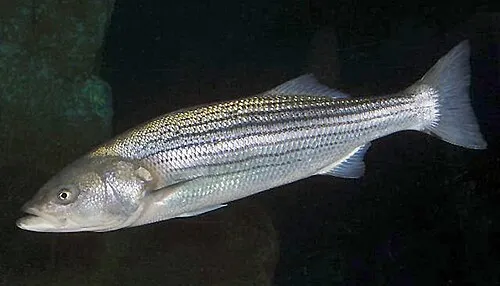
Morone saxatilis
speciesREVIEWEDAlso called striper, linesider, rock, or rockfish — an anadromous fish of the family Moronidae found primarily along the Atlantic coast of North America, widely introduced into inland recreational fisheries.
HABITAT
Atlantic coast of North America; runs up coastal rivers to spawn; Gulf Coast strain separate.
SIZE
mature 20–40 lb (9–18 kg)
IDENTIFY
Look for a stout body, a silver underside, and seven to eight continuous horizontal stripes on each side from the gills to the tail. Count the stripes and compare the whole fish before treating a match as confirmed.
LOOK-ALIKES
Confirm the seven to eight continuous horizontal stripes with the stout body and silver underside rather than color or a nickname alone; an observation can still require confirmation.
WHERE
Atlantic striped bass use coastal rivers, estuaries, and nearshore ocean habitat. Adults return to fresh or brackish water to spawn, while juveniles use river deltas and coastal sounds before moving seaward.
WHEN
The spring return to fresh or brackish water is a spawning movement; juveniles commonly remain in estuaries for two to four years. These life-history patterns do not guarantee catch presence on a given day.
TECHNIQUE
NOAA describes most recreational striped bass harvest as hook-and-line. Match tackle and presentation to the fish and local conditions, then check the current rule listing for the jurisdiction and method.
HANDLE
NOAA recommends minimizing the fight and handling, dehooking in the water when possible, keeping air exposure brief, using wet hands, and avoiding the eyes and gills. Support the body if a fish must be lifted.
CONSERVATION
NOAA's profile reports the Atlantic stock as overfished but not subject to overfishing in the referenced 2024 assessment. Stock status and management measures are separate from species identification.
RULES
Use the official jurisdiction listing for the current year, water boundary, method, vessel, and species rule. This field guide is educational and does not determine legal applicability.
SOURCE
FACT-CHECKED 2026-09-03 · REVIEWER fact-check-lane
TEXT CONDENSED FROM WIKIPEDIA, AVAILABLE UNDER CC BY-SA 4.0
Striped Bass identification is educational; species identification does not establish legal applicability for Maine.
- LAST LISTED/REFERENCE LIMITS
- 1 striped bass per person per day · minimum 28 inches · maximum 31 inches
- APPLICABILITY
- Statewide open season January 1-December 31, inclusive. In the Kennebec watershed (including the Sheepscot, Androscoggin, and related bays and tributaries), May 1-June 30 is catch-and-release only with single-hook artificial lures, and possession is prohibited December 1-June 30 except for that catch-and-release season. Federal waters (>3 miles from shore) are closed to striped bass fishing, taking, and possession. Length is total length and the slot is inclusive at 28 inches and 31 inches.
- SOURCE AUTHORITY
- Maine Department of Marine Resources, 2026 Maine Striped Bass Regulations
UPDATED March 25, 2026 · CHECKED Oct 8, 2026, 12:00 PM UTC · EFFECTIVE YEAR 2026
Maine DMR recreational fishing ↗The Maine DMR page is an informational summary; the applicable state regulations are authoritative.
COAST-TO-COAST COMPARISON
Striped Bass rules across 10 other coastal states
LAUNCH SITES
Curated launch sites in Maine (3)
This reference does not grant permission to fish or retain a catch. Location, method, vessel, species identification, and emergency closures can change what applies. Verify the applicable official rules.