Tautog regulations
Massachusetts · Curated reference from cited public sources · listings, not permission to fish or retain a catch · This selected Massachusetts saltwater reference subset is not a complete rulebook.
SPECIES LINKS
FIELD GUIDE
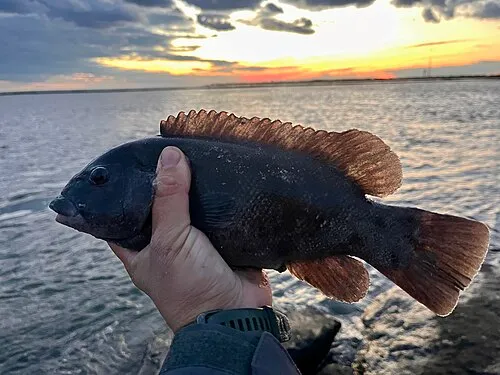
Tautoga onitis
speciesREVIEWEDThe blackfish, a wrasse native to the western Atlantic from Nova Scotia to South Carolina.
HABITAT
Hard substrates in inshore waters at 1–75 m (5–245 ft).
SIZE
typical 0.5–1.5 kg; max 90 cm and 13.1 kg
IDENTIFY
Tautog are stout wrasses with an arched head and broad tail. Juveniles are greenish and become darker with age; compare body shape and the full color pattern rather than relying on the blackfish nickname.
LOOK-ALIKES
Use the arched head, stout build, age-related color change, and complete body profile together; a nickname or partial image is not confirmation.
WHERE
Tautog aggregate around structured habitat from estuaries and inlets to offshore reefs. Rocks and boulders are common in the north; wrecks, jetties, reefs, and shellfish beds occur toward the southern range.
WHEN
In the north, adults move from offshore wintering grounds in spring to nearshore spawning and feeding areas in fall, reversing that migration as water temperatures drop from fall to winter.
TECHNIQUE
ASMFC describes shellfish and green or Jonah crabs as important food and bait context for tautog. Keep any bottom presentation matched to structure and current conditions, and confirm gear rules before use.
HANDLE
NOAA recommends wet hands, minimal handling and air exposure, dehooking in the water when possible, and supporting the body if lifted. These are release practices, not a guarantee of survival.
CONSERVATION
Tautog can live for more than 30 years and aggregate around structured habitats. They are managed with size and bag limits; check the specific jurisdiction for current measures.
RULES
Use the official state or federal listing for the current year and exact water, method, vessel, and season. This field guide cannot establish which tautog rule applies.
SOURCE
FACT-CHECKED 2026-09-03 · REVIEWER fact-check-lane
TEXT CONDENSED FROM WIKIPEDIA, AVAILABLE UNDER CC BY-SA 4.0
Tautog identification is educational; species identification does not establish legal applicability for Massachusetts.
- LAST LISTED/REFERENCE LIMITS
- 3/1/3/5 fish by the listed windows; one fish per person per day may exceed 21 inches and the vessel aggregate may not exceed 10 fish. · minimum 16 inches
- LISTED SEASON WINDOWS
- Apr 1, 2026 through May 31, 2026 · 3 fish listed
- Jun 1, 2026 through Jul 31, 2026 · 1 fish listed
- Aug 1, 2026 through Oct 14, 2026 · 3 fish listed
- Oct 15, 2026 through Dec 31, 2026 · 5 fish listed
- APPLICABILITY
- Private anglers; the most restrictive per-angler or vessel limit applies.
- SOURCE AUTHORITY
- Massachusetts DMF recreational finfish table and tautog note; 322 CMR is the official code.
UPDATED April 28, 2026 · CHECKED Aug 10, 2026, 12:00 PM UTC · EFFECTIVE YEAR 2026
Massachusetts DMF source table ↗The DMF page is an unofficial summary; 322 CMR is the official code.
COAST-TO-COAST COMPARISON
Tautog rules across 7 other coastal states
LAUNCH SITES
Curated launch sites in Massachusetts (5)
Gulf of Maine · MARINA
Gulf of Maine · DOCK
Gulf of Maine · MARINA
Gulf of Maine · MARINA
Gulf of Maine · MARINA
This reference does not grant permission to fish or retain a catch. Location, method, vessel, species identification, and emergency closures can change what applies. Verify the applicable official rules.