Dolphin regulations
North Carolina · Curated reference from cited public sources · listings, not permission to fish or retain a catch · This selected North Carolina saltwater reference subset is not a complete rulebook.
SPECIES LINKS
FIELD GUIDE
Coryphaena hippurus
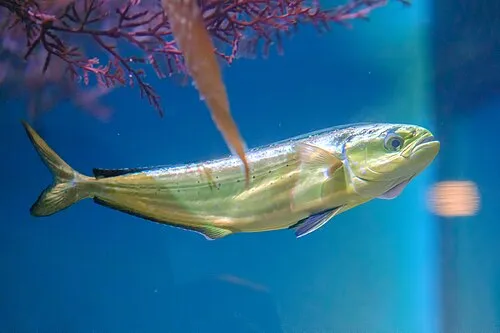
speciesREVIEWEDThe mahi-mahi or dorado, a surface-dwelling fish of offshore temperate, tropical, and subtropical waters worldwide. Most commonly found around the Gulf of Mexico, Costa Rica, Hawaii, and the Indian Ocean.
HABITAT
Offshore surface waters worldwide; temperate to subtropical.
SIZE
typically 7–13 kg (15–29 lb) and ~1 m
IDENTIFY
Dolphinfish / mahi-mahi (Coryphaena hippurus) display brilliant iridescent electric-blue, green, and gold sides, a single dorsal fin running almost the entire length of the back from head to deeply forked tail, and a steep vertical forehead on mature males ('bulls').
LOOK-ALIKES
Pompano dolphin (Coryphaena equiselis) overlap offshore and look very similar when small; pompano dolphin have a square broad tooth patch on the tongue and body depth exceeding 25% of standard length, whereas common mahi have a smaller oval tongue patch.
WHERE
Epipelagic open-ocean predators concentrated near the surface around Sargassum weedlines, current edges, temperature rips, floating debris, and offshore FADs.
WHEN
Follow warm blue water (typically >72 °F) into the Gulf, South Atlantic, Mid-Atlantic canyons, Southern California, and Hawaii during spring through autumn; present year-round in tropical latitudes.
TECHNIQUE
Trolling rigged ballyhoo, skirted lures, or feathers along weedlines and pitching live bait or bucktails once a school follows a hooked fish to the boat.
HANDLE
In Atlantic states where minimum fork lengths apply, unhook schoolie ('peanut') mahi over the water with pliers — their colors fade and stress mounts rapidly if dropped onto hot fiberglass decks.
CONSERVATION
Mahi-mahi are among the fastest-growing pelagic fishes, maturing in under a year and rarely living past four to five years; Atlantic coast rules set fork-length minimums (in FL/GA/SC) and vessel limits.
RULES
Atlantic dolphin/wahoo federal rules include per-person and per-vessel bag limits plus minimum fork lengths off Florida, Georgia, and South Carolina, while Gulf and Pacific rules differ — verify your ocean basin.
SOURCE
FACT-CHECKED 2026-11-13 · REVIEWER fact-check-lane
TEXT CONDENSED FROM WIKIPEDIA, AVAILABLE UNDER CC BY-SA 4.0
Dolphin identification is educational; species identification does not establish legal applicability for North Carolina.
- LISTED LIMIT
- 10 per person per day or 54 per trip, whichever is less; head boats 10 per person per day
- APPLICABILITY
- No minimum length is shown in the current table. The guide's footnote B supplies the 54-per-trip and head-boat qualifications.
- SOURCE AUTHORITY
- North Carolina DEQ Division of Marine Fisheries, Recreational Size and Bag Limits (effective November 1, 2026)
UPDATED November 1, 2026 · CHECKED Nov 15, 2026, 12:00 PM UTC · EFFECTIVE YEAR 2026
NC Division of Marine Fisheries size and bag limits ↗The NCDMF page is an informational summary; proclamations and the applicable state rules are authoritative.
COAST-TO-COAST COMPARISON
Dolphin rules across 3 other coastal states
LAUNCH SITES
Curated launch sites in North Carolina (3)
This reference does not grant permission to fish or retain a catch. Location, method, vessel, species identification, and emergency closures can change what applies. Verify the applicable official rules.