Red Drum regulations
North Carolina · Curated reference from cited public sources · listings, not permission to fish or retain a catch · This selected North Carolina saltwater reference subset is not a complete rulebook.
SPECIES LINKS
FIELD GUIDE
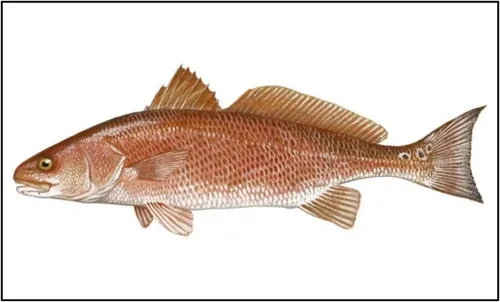
Sciaenops ocellatus
speciesREVIEWEDAlso known as redfish, channel bass, or spottail bass — the only species in the genus Sciaenops. Found in the Atlantic from Massachusetts to Florida and the Gulf of Mexico to northern Mexico.
HABITAT
Coastal waters and estuaries of the southeast US; feeds on the bottom.
SIZE
three-year-olds 6–8 lb; largest reported just over 94 lb (43 kg)
IDENTIFY
Red drum (Sciaenops ocellatus), also known as redfish, are found along the Atlantic coast from Massachusetts to Florida. Compare the whole fish and scientific name, not a regional nickname alone.
LOOK-ALIKES
Confirm Sciaenops ocellatus rather than a generic redfish or drum label; a nickname alone is not confirmation.
WHERE
Juveniles are most abundant in estuarine waters and inlets, while fish older than age four inhabit deeper waters. Red drum thrive in estuarine waters during their younger years before moving to deeper areas as adults.
WHEN
Adults move offshore or south in winter and inshore or north in spring; spawning occurs in nearshore waters during summer and fall. Regional timing is variable and does not promise catch success.
TECHNIQUE
ASMFC describes juvenile and sub-adult red drum feeding on shrimp, small crabs, and fish. Bait or lure choice can reflect that prey profile, but these notes are not exact catch-location recommendations.
HANDLE
NOAA recommends quick handling, wet hands, minimal air exposure, avoiding eyes and gills, and dehooking in the water when possible. Support the fish along its body if lifted.
CONSERVATION
ASMFC manages red drum through an interstate plan and habitat-focused actions, with state measures and federal-water restrictions described separately on its species page. Check current sources for changes.
RULES
Check the current state, federal, or interstate listing for the water boundary, season, method, vessel, size, and possession rule. This educational profile is not a legal applicability decision.
SOURCE
FACT-CHECKED 2026-09-03 · REVIEWER fact-check-lane
TEXT CONDENSED FROM WIKIPEDIA, AVAILABLE UNDER CC BY-SA 4.0
Red Drum identification is educational; species identification does not establish legal applicability for North Carolina.
- LISTED LIMIT
- 1 per person per day
- LISTED MIN SIZE
- 18 inches
- LISTED MAX SIZE
- 27 inches
- APPLICABILITY
- Coastal and joint waters; 18-inch minimum to 27-inch maximum total length (TL). Red drum greater than 27 inches may not be possessed; gigging, spearing, and gaffing are unlawful.
- SOURCE AUTHORITY
- North Carolina DEQ Division of Marine Fisheries, Recreational Size and Bag Limits (effective November 1, 2026)
UPDATED November 1, 2026 · CHECKED Nov 15, 2026, 12:00 PM UTC · EFFECTIVE YEAR 2026
NC Division of Marine Fisheries size and bag limits ↗The NCDMF page is an informational summary; proclamations and the applicable state rules are authoritative.
COAST-TO-COAST COMPARISON
Red Drum rules across 9 other coastal states
LAUNCH SITES
Curated launch sites in North Carolina (3)
This reference does not grant permission to fish or retain a catch. Location, method, vessel, species identification, and emergency closures can change what applies. Verify the applicable official rules.