Peto (wahoo, Acanthocybium solandri) regulations
Puerto Rico · Curated reference from cited public sources · listings, not permission to fish or retain a catch · This selected Puerto Rico marine reference subset is not a complete rulebook.
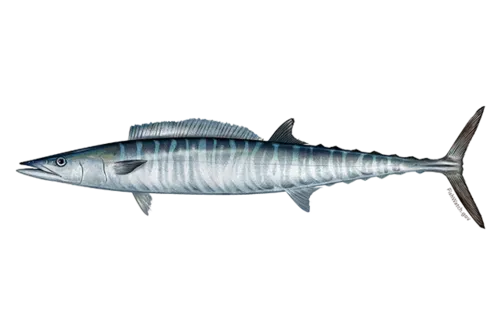
FIELD GUIDE
Acanthocybium solandri
speciesREVIEWEDA scombrid found worldwide in tropical and subtropical seas, known in Hawaii as ono.
HABITAT
Circumtropical distribution across the Atlantic, Pacific, and Indian Oceans.
SIZE
up to 2.77 m (9 ft 1 in) and 83 kg (183 lb)
IDENTIFY
Wahoo / ono (Acanthocybium solandri) have a long cylindrical cobalt-blue body marked by 24 to 30 vivid vertical dark-blue bars, a beak-like pointed snout whose jaws fold neatly, and finely serrated triangular teeth.
LOOK-ALIKES
Separate wahoo from king mackerel by the vertical cobalt bars, long low spiny first dorsal fin (23–27 spines vs. 12–18 on king mackerel), and a fold of skin concealing the rear corner of the upper jaw.
WHERE
Solitary or small-pack pelagic predators patrolling steep shelf drop-offs, ledges, seamounts, canyons, and floating offshore debris in tropical and warm-temperate seas.
WHEN
Available year-round in Hawaii, the Caribbean, South Florida, and northern Gulf shelf edges, moving north along Gulf Stream eddies off the Carolinas and Mid-Atlantic in warmer months.
TECHNIQUE
High-speed trolling (12–18 knots) with heavy inline trolling weights and wire-rigged skirted lures, deep-running plugs, or rigged ballyhoo along steep bathymetric breaks.
HANDLE
Exercise extreme caution boatside: wahoo make explosive runs and carry interlocking razor-sharp jaws capable of severe lacerations; unhook released fish outboard with long-reach dehookers.
CONSERVATION
Fast-growing and wide-ranging, Atlantic wahoo are managed under the South Atlantic Council's Dolphin Wahoo Fishery Management Plan and Pacific populations under Western Pacific / West Coast pelagic frameworks.
RULES
Check regional per-person bag limits (such as the Atlantic two-fish daily limit) and rules requiring pelagics to be landed with head and fins intact.
SOURCE
FACT-CHECKED 2026-11-13 · REVIEWER fact-check-lane
TEXT CONDENSED FROM WIKIPEDIA, AVAILABLE UNDER CC BY-SA 4.0
Peto (wahoo, Acanthocybium solandri) identification is educational; species identification does not establish legal applicability for Puerto Rico.
- LAST LISTED/REFERENCE LIMITS
- Up to 5 per species per fisher per day or 10 per boat per day, whichever is less.
- APPLICABILITY
- Article 18.11 states the recreational quota; no size limit or closed season is stated there. DRNA's current page still links the 2010 Reglamento 7949; no newer replacement was visible.
- SOURCE AUTHORITY
- DRNA Reglamento de Pesca de Puerto Rico - 2010, Article 18.11 (Peto)
UPDATED November 1, 2010 · CHECKED Nov 15, 2026, 12:00 PM UTC · EFFECTIVE YEAR 2010
DRNA fishing regulations ↗The DRNA page is an informational summary; the applicable regulations are authoritative.
LAUNCH SITES
Curated launch sites in Puerto Rico (1)
This reference does not grant permission to fish or retain a catch. Location, method, vessel, species identification, and emergency closures can change what applies. Verify the applicable official rules.