Coho Salmon (ocean, Marine Area 2) regulations
Washington · Curated reference from cited public sources · listings, not permission to fish or retain a catch · This selected Washington saltwater reference subset is not a complete rulebook.
FIELD GUIDE
Oncorhynchus kisutch
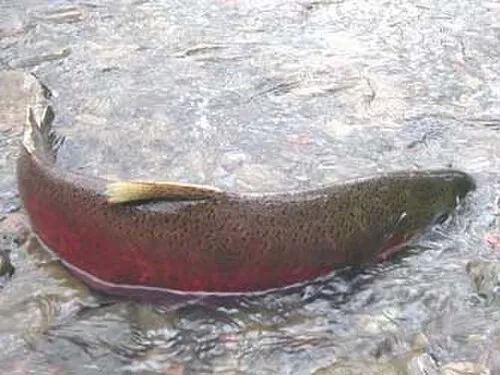
speciesREVIEWEDThe silver salmon, one of the six Pacific salmon species, often sold as medium red salmon. At three or four years old it swims up rivers and streams to spawn.
HABITAT
North Pacific and tributary rivers; spawns in freshwater streams.
SIZE
average 20–28 in and 7–11 lb
IDENTIFY
Ocean coho (Oncorhynchus kisutch) have metallic blue backs, bright silver sides, small black spots on the back and upper lobe of the tail fin only, and a white or pale-gray gum line along the base of the lower teeth.
LOOK-ALIKES
Check the lower gum line first: coho show a distinct white or light-gray band at the base of the teeth and lack spots on the lower lobe of the caudal fin, distinguishing them from black-gummed Chinook.
WHERE
Coho spend roughly 18 months in coastal marine waters over the continental shelf, frequently feeding higher in the water column than Chinook before returning to coastal streams and rivers.
WHEN
Ocean coho fisheries typically concentrate from summer into early autumn as three-year-old adults stage near estuaries ahead of autumn and early-winter freshwater spawning runs.
TECHNIQUE
Trolling or casting spoons, spinners, and rigged bait in upper to mid-water layers are standard recreational approaches. Confirm barbless circle or single-point hook rules for the management zone.
HANDLE
Coho shed scales easily when thrashing against boat decks or knotted mesh; dehook wild or non-target fish in the water without lifting them by the jaw or tail.
CONSERVATION
Multiple West Coast coho populations are protected under the Endangered Species Act, making accurate gum-line identification and mark-selective adipose-fin checks essential on the water.
RULES
Retention often depends on whether the adipose fin is healed-clipped and which sub-area line you are fishing inside; verify state and federal ocean salmon notices before departure.
SOURCE
FACT-CHECKED 2026-11-13 · REVIEWER fact-check-lane
TEXT CONDENSED FROM WIKIPEDIA, AVAILABLE UNDER CC BY-SA 4.0
Coho Salmon (ocean, Marine Area 2) identification is educational; species identification does not establish legal applicability for Washington.
- LAST LISTED/REFERENCE LIMITS
- June 20-28: release all coho. June 29-September 30: part of the two-salmon daily aggregate limit; retain only hatchery-marked coho at least 16 inches. All Chinook must be released August 22-September 30. · minimum 16 inches
- LISTED SEASON WINDOWS
- Jun 20, 2026 through Jun 28, 2026 · 0 fish listed
- Jun 29, 2026 through Sep 30, 2026 · 2 fish listed
- APPLICABILITY
- Marine Area 2 (Westport-Ocean Shores) ocean salmon fishery; two fish is the total salmon daily limit. Only hatchery-marked coho may be retained. WSR 26-17-084, effective August 18, 2026, closes Chinook retention August 22-September 30; the Westport fishery closed as scheduled October 1, 2026.
- SOURCE AUTHORITY
- Washington WSR 26-13-033 (base 2026 schedule, effective June 20), WSR 26-17-084 (effective August 18; Chinook release August 22-September 30), and WDFW Ocean Salmon Report (October 6, 2026; Westport closed October 1)
UPDATED August 18, 2026 · CHECKED Oct 19, 2026, 12:00 PM UTC · EFFECTIVE YEAR 2026
WDFW fishing regulations ↗The WDFW page is an informational summary; the applicable state regulations and emergency rules are authoritative.
COAST-TO-COAST COMPARISON
Coho Salmon (ocean, Marine Area 2) rules across 1 other coastal state
LAUNCH SITES
Curated launch sites in Washington (7)
Washington · MARINA
Washington · MARINA
Washington · MARINA
Washington · MARINA
Washington · MARINA
Washington · MARINA
Washington · MARINA
This reference does not grant permission to fish or retain a catch. Location, method, vessel, species identification, and emergency closures can change what applies. Verify the applicable official rules.