Lingcod (Marine Areas 1-4) regulations
Washington · Curated reference from cited public sources · listings, not permission to fish or retain a catch · This selected Washington saltwater reference subset is not a complete rulebook.
FIELD GUIDE
Ophiodon elongatus
speciesREVIEWEDA greenling of the family Hexagrammidae — despite its name, neither a cod nor a ling. Native from the Shumagin Islands in the Gulf of Alaska to Baja California.
HABITAT
Rocky bottoms at 10–100 m (33–328 ft), occasionally deeper.
SIZE
up to 152 cm (60 in) and 39 kg (86 lb)
IDENTIFY
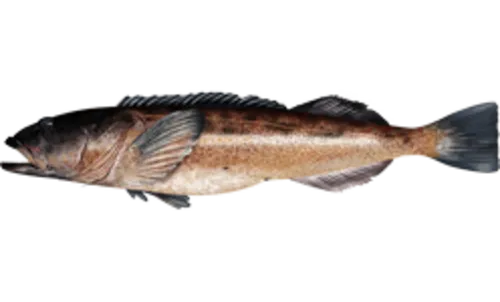
Lingcod (Ophiodon elongatus) have an elongated mottled brown, gray, or blue-green body, a single long dorsal fin notched into spiny and soft sections, large pectoral fins, and a wide mouth armed with prominent canine teeth.
LOOK-ALIKES
Separate lingcod from cabezon by checking the tail and snout: lingcod lack a fleshy flap on the snout, have scales, and lack cabezon's stout rounded sculpin head; some lingcod naturally have harmless blue-green flesh.
WHERE
Adults ambush prey around high-relief rocky reefs, pinnacles, boulders, and kelp-edge ledges from nearshore subtidal zones down past 1,000 feet along the Pacific coast.
WHEN
Males move into shallower rocky crevices from late autumn through winter to guard egg nests, a vulnerable period reflected in regional winter groundfish closures.
TECHNIQUE
Heavy metal bars, swimbaits, and whole-bait rigs worked tight to rocky structure are typical. Because lingcod share habitat with protected rockfish, carry a descending device rigged and ready.
HANDLE
Lingcod lack a swim bladder and handle depth changes well, though rockfish caught alongside them often suffer barotrauma. Grip carefully away from the sharp canine teeth and gills when releasing.
CONSERVATION
West Coast lingcod rebuilt ahead of schedule following early-2000s conservation measures and are managed alongside the Pacific groundfish complex with depth constraints that protect co-occurring yelloweye and quillback rockfish.
RULES
Groundfish depth boundaries (such as seaward-only or inshore-only lines), fillet-at-sea skin rules, minimum lengths, and Marine Protected Area boundaries apply — verify the exact management area.
SOURCE
FACT-CHECKED 2026-11-13 · REVIEWER fact-check-lane
TEXT CONDENSED FROM WIKIPEDIA, AVAILABLE UNDER CC BY-SA 4.0
Lingcod (Marine Areas 1-4) identification is educational; species identification does not establish legal applicability for Washington.
- LAST LISTED/REFERENCE LIMITS
- 2 per angler per day; included in the 9-bottomfish aggregate.
- LISTED SEASON WINDOWS
- Mar 14, 2026 through Oct 17, 2026 · 2 fish listed
- APPLICABILITY
- Coastal Marine Areas 1-4, including Marine Area 2; no minimum size. Area 2 has 30-fathom/deepwater closure restrictions that limit retention in specified waters/dates.
- SOURCE AUTHORITY
- Washington Department of Fish & Wildlife, “Coastal recreational bottomfish fishery season opens March 14” (2026).
UPDATED March 5, 2026 · CHECKED Oct 19, 2026, 12:00 PM UTC · EFFECTIVE YEAR 2026
WDFW fishing regulations ↗The WDFW page is an informational summary; the applicable state regulations and emergency rules are authoritative.
COAST-TO-COAST COMPARISON
Lingcod (Marine Areas 1-4) rules across 3 other coastal states
LAUNCH SITES
Curated launch sites in Washington (7)
Washington · MARINA
Washington · MARINA
Washington · MARINA
Washington · MARINA
Washington · MARINA
Washington · MARINA
Washington · MARINA
This reference does not grant permission to fish or retain a catch. Location, method, vessel, species identification, and emergency closures can change what applies. Verify the applicable official rules.